A microwave oven is one of the most used appliances in any home, so when it suddenly stops heating, starts sparking, or makes strange noises, it disrupts your entire routine. Many homeowners immediately consider replacing the unit, but several common issues can be fixed with basic troubleshooting. This DIY microwave oven repair guide explains common failures, their causes, simple solutions, safety precautions, and when to seek professional help.
Understanding how your microwave works and what commonly goes wrong will help you make informed decisions and potentially save money. However, unlike other household appliances, microwaves contain high-voltage components that store electricity even when unplugged. For this reason, you should only attempt repairs that are safe for beginners. More advanced issues should be handled by experienced technicians. Trusted companies such as Sarcon Appliance Repair, serving homeowners since 2013, offer safe and reliable repairs when the problem is beyond DIY.
Common Microwave Oven Problems
Learning to identify symptoms helps narrow down the issue before you begin troubleshooting.
Microwave not heating
This is the most common problem and often linked to a faulty magnetron, diode, or capacitor. While some checks can be done at home, internal part replacement should be handled by professionals due to high-voltage risks.
Microwave runs but no heat
If the turntable spins and the light works but food stays cold, the high-voltage system is likely at fault.
Microwave sparking
Sparks can appear when metal objects or foil are inside the microwave, but they can also be caused by burnt waveguide covers or chipped interior paint.
Unusual noises
Humming, rattling, or buzzing noises can indicate a worn motor, loose components, or an issue with the high-voltage transformer.
Buttons not working
Electrical faults, damaged control panels, or worn touchpads can cause unresponsive buttons.
Turntable not rotating
This is usually linked to a damaged motor, roller ring obstruction, or broken coupler.
Causes of Microwave Malfunctions
Understanding the causes makes troubleshooting easier and safer.
Burnt or damaged diode: Prevents proper power conversion, which leads to no heating.
Faulty magnetron: A worn magnetron cannot generate microwaves, causing complete heating failure.
Door switch issues: If the door switch is broken, the microwave will not operate for safety reasons.
Damaged turntable motor: Causes rotation failure and uneven heating.
Blocked vents: Restricts airflow and leads to overheating.
Food buildup: Spills and splatters can clog vents, damage interior paint, or cause sparks.
Safety Steps Before DIY Microwave Oven Repair
Always prioritize safety when dealing with microwaves.
Unplug the microwave completely.
Never open the internal high-voltage compartment.
Avoid touching capacitors, transformers, and magnetrons.
Do not attempt repairs if you smell burning plastic or electrical smoke.
Only perform repairs related to cleaning, switches, or external components.
If the issue involves high-voltage components, Sarcon Appliance Repair is a safe and reliable option for diagnostics and repair. Their skilled technicians are trained to handle internal repairs that require specialist tools and high-level safety procedures.
DIY Troubleshooting and Repair Steps
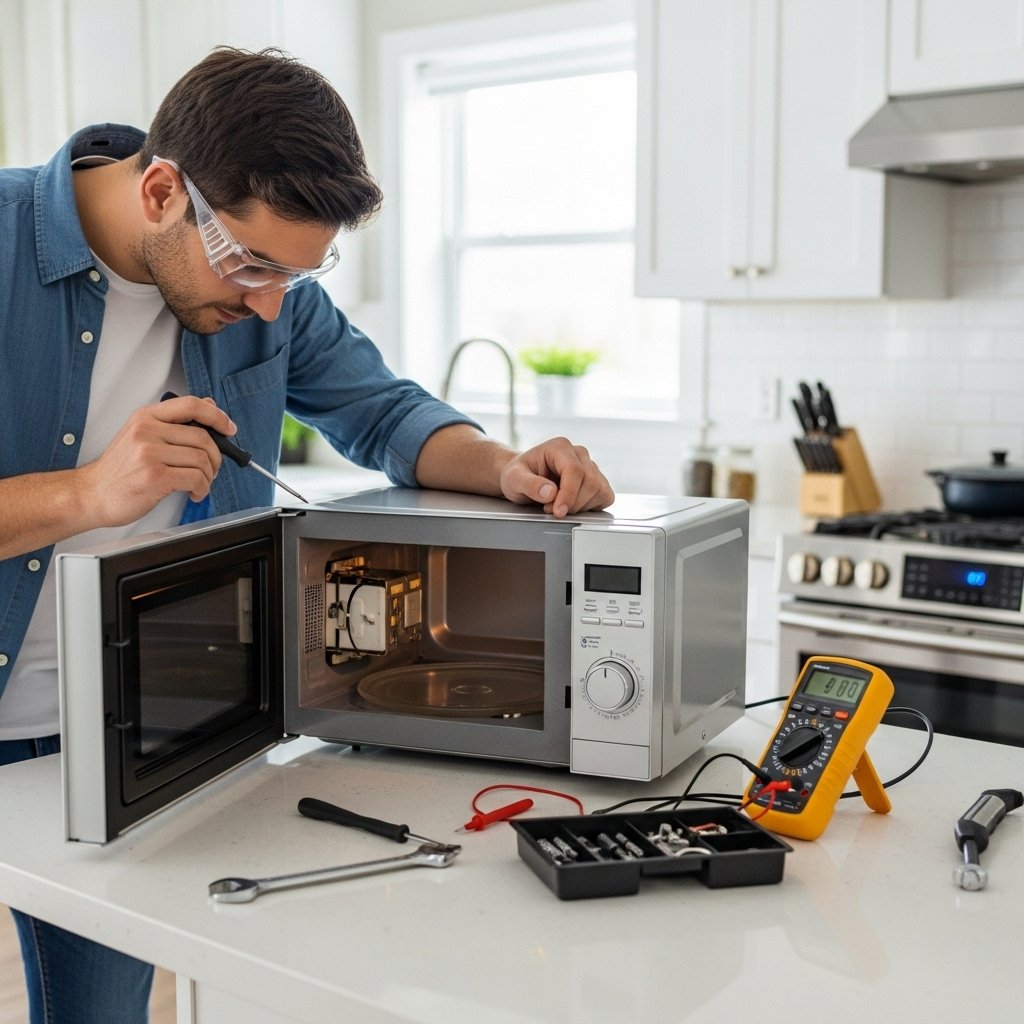
Here are safe and practical microwave oven repair steps that most homeowners can attempt.
1. Check the power supply
A loose plug, faulty outlet, or tripped breaker can mimic appliance failure. Test the microwave using a different outlet.
2. Inspect the door switch
Microwaves will not start if the door is not closed properly. Clean the latch area and check if you hear a clicking sound when closing the door. If the door switch is damaged, replacing it is usually safe because it does not require opening the high-voltage compartment.
3. Clean the interior
Food splatters can cause sparks and odors. Use a mixture of warm water and mild detergent to clean the walls, turntable, and roller ring.
4. Check the turntable system
Remove the glass tray and inspect the roller ring for debris. Make sure the coupler is not cracked. If needed, replace the roller ring or coupler, both of which are easy DIY parts.
5. Replace the light bulb
If the microwave light is not working, remove the access panel on the back or side, depending on the model. Replace the bulb with the correct wattage.
6. Inspect the waveguide cover
A burnt or dirty waveguide cover can cause sparks. Remove it, clean it gently, and replace it if damaged.
7. Reset the control panel
Unplug the microwave for a few minutes to reset the electronic board if the buttons or display stop responding.
8. Check the vents
Blocked vents cause overheating and poor performance. Clean dust and grease from the vents using a soft brush.
Repairs You Should Not Attempt
Some microwave oven repair tasks are extremely dangerous and should only be done by trained professionals. Avoid the following:
Repairing or testing the magnetron
Replacing capacitors or transformers
Fixing the diode
Working inside the high-voltage section
These components store lethal electrical charges, even after the microwave is unplugged. If your issue involves any of these parts, call an experienced repair technician. Sarcon Appliance Repair offers same-day help and has specialists trained to handle complex microwave repairs safely.
Maintenance Tips for Better Microwave Lifespan
Regular maintenance helps prevent many microwave oven repair problems.
Wipe the interior after every use to prevent grease buildup.
Use microwave-safe containers to avoid sparks.
Never run the microwave empty.
Avoid slamming the door because it can damage the door switches.
Keep vents clean for proper airflow.
Schedule occasional inspections if you notice unusual performance changes.
When to Call a Professional
DIY repairs are helpful for simple issues, but certain problems require expert attention. Seek professional help if you notice:
Burning smells
No heat even after basic checks
Heavy buzzing noises
Repeated sparking
Electrical issues
Failure after multiple troubleshooting attempts
Professional repair services like Sarcon Appliance Repair provide accurate diagnostics, safe repairs, and thorough cleaning. With experience dating back to 2013, their technicians understand the complexities of modern microwave systems and can restore your appliance quickly and safely.
Conclusion
Knowing how to troubleshoot and handle basic microwave oven repair tasks can save time and prevent unnecessary replacement costs. While you can safely perform simple repairs such as cleaning, replacing the turntable parts, checking the door latch, or fixing the light bulb, anything involving high-voltage components should be left to professionals. A combination of smart DIY solutions and timely expert support ensures your microwave stays efficient, safe, and reliable. When you need trusted, same-day assistance, companies like Sarcon Appliance Repair offer dependable service and skilled technicians who can diagnose and fix issues that are too risky for DIY.
FAQs
1. Why is my microwave not heating even though it runs?
This usually indicates a faulty magnetron, diode, or capacitor, which requires professional repair.
2. Can I fix a microwave that is sparking?
Yes, if the cause is a dirty interior or damaged waveguide cover. If sparks continue, call a technician.
3. Is it safe to repair a microwave at home?
Only for simple fixes such as cleaning, checking switches, or replacing the bulb. Avoid high-voltage repairs.
4. How do I know if my microwave needs professional repair?
No heating, burning smells, electrical problems, or repetitive sparking indicate that expert help is needed.
5. Can Sarcon Appliance Repair fix all microwave oven repair issues?
Yes, their technicians handle diagnostics, deep cleaning, electrical repairs, and safe replacement of high-voltage parts.