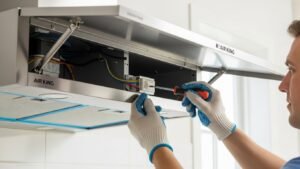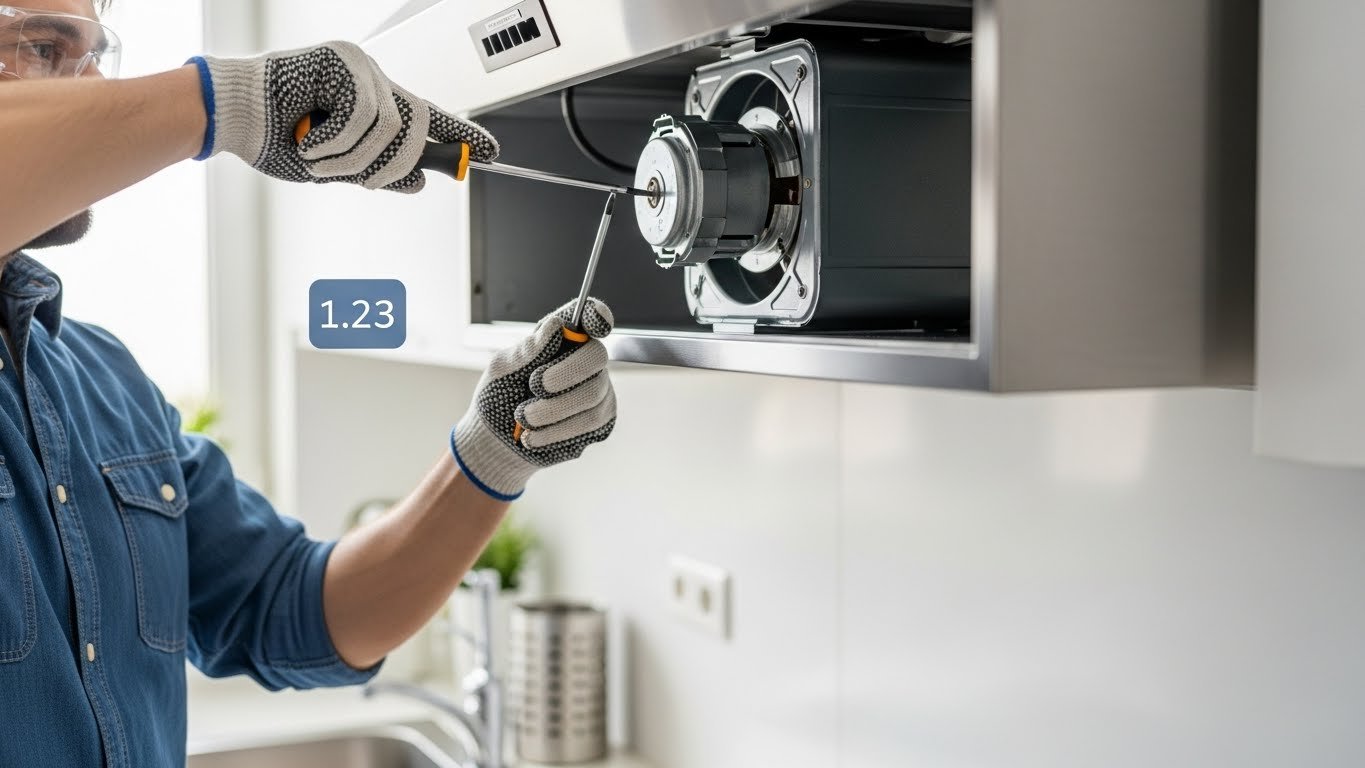
If your range hood has gotten louder, lost suction, or barely pulls smoke from the air anymore, chances are the fan motor is worn out. Learning how to replace a range hood fan is much easier than most homeowners expect. With a few tools, some patience, and a careful approach, you can refresh your kitchen ventilation without calling a pro—unless you want one.
As an appliance repair professional in the U.S., I’ve seen many homeowners assume the entire hood needs replacement, when in reality, a simple fan swap brings it back to life. This guide breaks down every step you need to replace a range hood fan safely and confidently.
Before you start, remember this: if at any point you feel unsure around electrical work, a trained technician can make the process easier. Companies like Sarcon Appliance Repair handle fan replacements often, especially when the motor housing or wiring needs more experienced hands.
Signs Your Range Hood Fan Needs Replacement
A range hood fan doesn’t fail overnight. Most issues build up gradually. Here are the most common signs:
Weak Suction
If steam lingers around your cooktop, even on high speed, the fan motor may be losing torque.
Loud Grinding or Humming Sounds
Worn bearings or an unbalanced fan blade often produce noise. If you hear irregular humming, a failing motor may be the culprit. For comparison, if you’re dealing with similar humming issues in your fridge, check this helpful guide: Refrigerator Humming Noise: Causes, Fix & Prevention.
Fan Not Spinning at All
If it clicks or still receives power but doesn’t rotate, motor replacement is usually the solution.
Burning Smell
This is a red flag. Shut the hood off immediately. Motors with worn coils can overheat.
Tools You Need to Replace a Range Hood Fan
You won’t need a shop full of tools. Most homeowners already have what’s required:
Phillips and flat-head screwdrivers
Nut driver set
Multimeter (optional but helpful)
Work gloves
Replacement fan motor or blower assembly specific to your model
Flashlight
Small magnetic bowl for screws
Step-by-Step Guide: How to Replace Range Hood Fan
Every range hood design is slightly different, but the core process is the same.
Step 1: Cut Power to the Hood
Never work on a live appliance. Turn off the breaker connected to the hood. Even a simple replacement job requires full safety precautions.
If you ever face similar electrical issues in other appliances, such as a microwave repair, remember to disconnect power before accessing internal components.
Step 2: Remove the Filters and Light Covers
Most filters slide or pop out. Removing them exposes the fan assembly and gives you clear access.
Step 3: Locate and Access the Fan Motor Assembly
Depending on your model:
Some hoods have a removable interior panel
Others reveal the fan housing after removing 4–6 screws
Have your flashlight ready. This area is usually dark and holds years of collected grease.
Step 4: Disconnect the Fan Wiring
You may see:
Wire nuts
Quick-connect clips
Color-coded leads
Take a clear photo before disconnecting anything. This helps ensure accurate reconnection later on.
Step 5: Remove the Old Fan Motor
The fan motor typically sits in a small housing held by screws. Remove the housing and slide the fan out. You might notice grease buildup. This is a great time to clean the cavity before installing the new motor.
Step 6: Install the New Fan Motor or Blower
Place the replacement motor in the same position as the old one. Align the screw holes and secure it firmly. Avoid over-tightening, because it can create vibration noise later.
Reconnect the wiring exactly as photographed.
Step 7: Reassemble the Hood
Reattach panels, replace filters, and restore any covers removed earlier.
Step 8: Restore Power and Test
Turn the breaker back on. Test all fan speeds. The hood should now:
Run quietly
Pull more air
Respond instantly to speed changes
If it still struggles, airflow obstruction in ductwork may be the next thing to inspect.
When to Call a Professional Instead
Some range hoods have complicated internal wiring or difficult motor access. Professional help is also smart when:
You smell burning
The hood has multiple motors
The wiring looks damaged
You feel uncomfortable with electrical work
A trained technician can diagnose and replace your fan quickly. Sarcon Appliance Repair often handles these repairs same-day, especially in situations where the motor assembly is deeply integrated into the hood’s internal ducting.
If you live in Central Pennsylvania and prefer expert diagnostics, you can schedule trusted service through their local pages, such as appliance repair in Harrisburg.
Related Issues That May Require Professional Help
During a fan replacement, many homeowners discover other appliance issues around the kitchen. If you notice additional symptoms—like your oven losing heat—this guide may help: Oven Not Heating Up.
Similarly, blocked ventilation and grease buildup can sometimes lead to trouble with your cooktop. If you’re experiencing uneven heating or burner ignition problems, this resource is helpful: DIY Cooktop Repair: Easy Steps for Gas & Electric.
Internal linking done naturally ensures you have access to guidance for other common appliance issues as they come up.
Final Thoughts
Learning how to replace a range hood fan gives you more control over your kitchen appliances and can restore proper ventilation without major expense. Once the new motor is installed, most homeowners notice better suction, reduced smoke buildup, and a quieter cooking environment. Whether you choose to handle the repair yourself or bring in a professional, keeping your range hood in good shape helps maintain cleaner air and a more comfortable kitchen.
FAQs
How long does it take to replace a range hood fan?
Most replacements take 30–60 minutes, depending on your hood’s design and how easily the motor housing is accessible.
Do all range hood fans fit all models?
No. Fan motors are model-specific. Always check the part number in your user manual or on the old motor.
Why is my range hood still noisy after replacing the fan?
Noise may come from loose screws, an unbalanced blade, or vibration against the hood housing. Tighten all hardware and ensure proper alignment.
Can I replace the fan without removing the whole range hood?
Yes. Almost all fan assemblies can be accessed from the bottom once filters and interior panels are removed.
When should I call a technician instead of doing it myself?
Call a pro if you’re uncomfortable with wiring, smell burning, encounter damaged wires, or own a hood with complex built-in electronics.