If your fridge has started dispensing water that tastes a little off or your ice cubes look cloudy, it might be time to replace the refrigerator water filter. Most homeowners forget this small but important maintenance step, yet it directly affects water quality, ice clarity, and even the lifespan of your refrigerator’s internal components. The good news is that swapping out a filter is usually a quick job that anyone can handle with a little guidance.
In this guide, you’ll learn how to replace refrigerator water filter easily without stress or confusion. Whether you own a French door refrigerator, a side-by-side model, or a top-freezer design, the process is pretty similar across major brands in the U.S. We’ll walk through each step and share some expert-backed tips from years of appliance repair experience.
Why Replacing Your Refrigerator Water Filter Matters
Your refrigerator water filter is responsible for removing impurities like chlorine, sediment, and small contaminants from your drinking water. Over time, these filters become clogged and less effective. A worn-out filter can lead to odd tastes, slow water flow, or mineral buildup in the dispenser line.
Many homeowners notice reduced performance around the same time they start hearing humming or buzzing from the fridge. If your unit makes unusual noises, you may find our blog on Refrigerator Humming Sounds: Causes and Solutions helpful as well.
Refrigerator Humming Sounds: Causes and Solutions
How Often Should You Replace the Refrigerator Water Filter?
Manufacturers typically recommend replacing the filter every six months, but usage plays a big role. A larger family that uses the dispenser frequently may need to change it sooner. Homes with hard water may also experience faster filter wear.
If you notice water flow slowing down, that’s usually your first sign. If taste changes, that’s the second. And if your refrigerator is struggling with related issues, you can review the detailed insights in our blog Difference Between Fridge Repair and Service to help determine whether the issue is filter-related or rooted in something bigger.
Difference Between Fridge Repair and Service
Types of Refrigerator Water Filters
Before you learn how to replace refrigerator water filter easily, it helps to understand where your filter might be located. Common styles include:
Push-In Filters
These are usually found in the upper right corner inside the fridge compartment. You press the filter to release it, then pull it out.
Twist-In Filters
Often located in the base grille or upper interior section. These filters require a quarter-turn twist to unlock.
Grille-Located Filters
Installed at the bottom of the fridge, hidden behind the toe grille. These twist in place and are easily accessible.
How to Replace Refrigerator Water Filter Easily
Below is a simple, step-by-step walkthrough that applies to most refrigerator brands in the U.S., including Samsung, LG, Whirlpool, GE, Frigidaire, and others.
Step 1: Locate Your Water Filter
Start by checking your fridge manual or inspecting common locations like the upper right interior corner or bottom grille. If you’re unsure, most manufacturers list the filter location online based on model number.
Step 2: Turn Off the Water Supply (Optional)
Many modern fridges allow filter replacement without shutting off the water. However, if your dispenser line is older, turning off the water can help prevent drips.
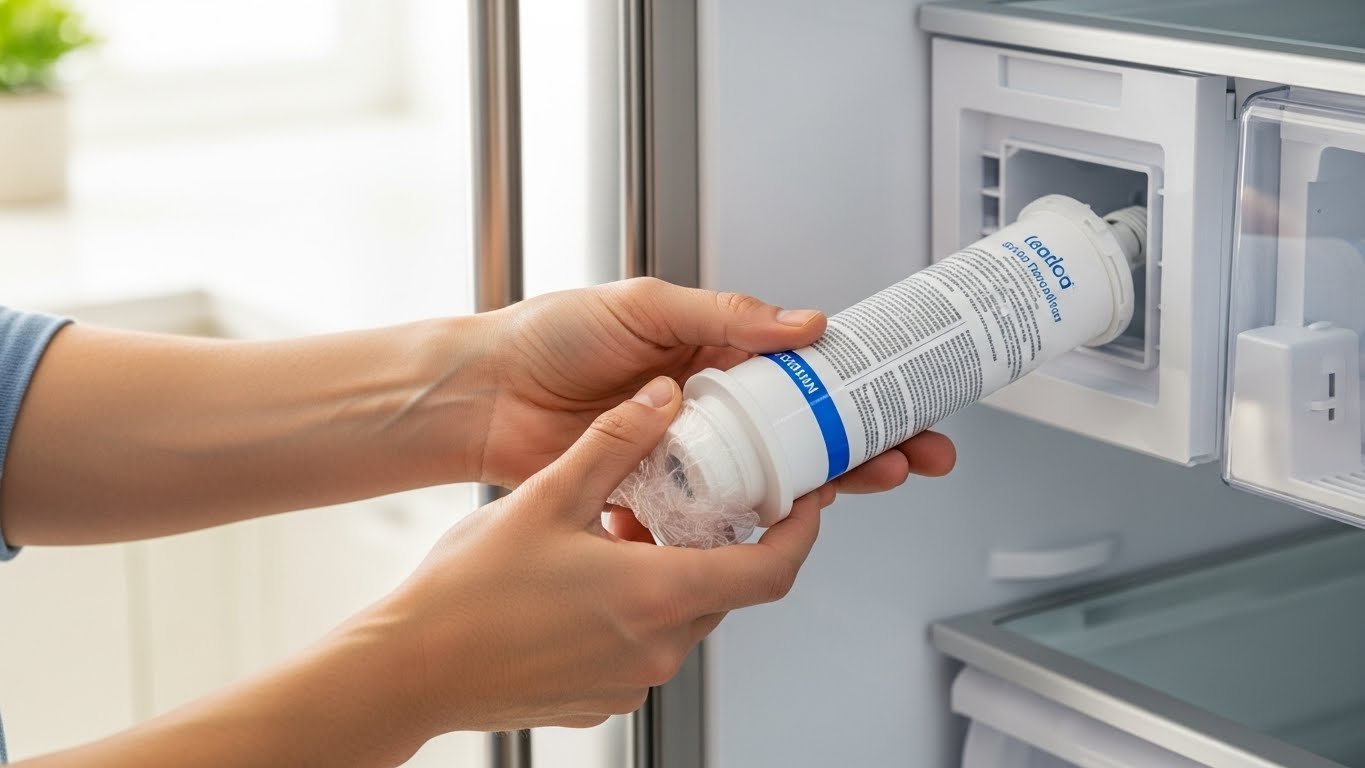
Step 3: Release the Old Filter
For push-in styles, press the filter inward until it pops out.
For twist-in styles, rotate the filter counterclockwise and pull straight out.
You may hear a little hiss of pressure release, which is normal.
Step 4: Insert the New Filter
Remove any protective caps on the new filter. Align the notches correctly, then push or twist the filter into place until it clicks or locks.
Step 5: Flush the New Filter
Run at least two to four gallons of water through the dispenser to clear out carbon residue. This also primes the new filter for clean water flow.
Step 6: Reset the Filter Light
Your refrigerator likely has a filter indicator that needs resetting. Follow the instructions for your model to clear the alert and start the countdown for the next replacement cycle.
Troubleshooting Tips if the Filter Won’t Fit
Sometimes a replacement filter won’t click into place. These common issues may be to blame:
Incorrect Filter Model
Even a single digit off in the model number can prevent installation.
Debris in the Filter Slot
Wipe the slot with a clean cloth to remove dust or mineral buildup.
Misalignment
For twist-in filters, double-check that the grooves line up exactly.
If the problem continues, there could be an underlying issue with the dispenser system, water lines, or the fridge’s internal components. In that case, scheduling refrigerator repair might be the best option. You can visit the service page here for expert help:
Refrigerator Repair
When to Call a Professional
Replacing the water filter is usually simple. But if you’re dealing with leaking lines, no water flow after installation, or filter housing damage, a professional technician can diagnose the issue quickly. Homeowners in South Central Pennsylvania often rely on trusted teams like Sarcon Appliance Repair, especially when same-day help is needed or when it’s unclear whether the filter or another component is causing the problem.
If you’re located in areas like Dauphin County or nearby neighborhoods, you can easily get reliable appliance repair in Harrisburg through this page:
Appliance Repair in Harrisburg
Final Tips for Keeping Your Water System in Good Shape
Replacing the filter regularly will help reduce mineral buildup and keep your fridge running smoothly. Consider marking your calendar every six months so you don’t forget. If your water dispenser becomes slow or stops working even with a new filter, it may be time to inspect the inlet valve or internal water lines, as buildup can sometimes block flow. And if your refrigerator ever starts leaking from the base, guides like Common Causes of Fridge Water Leakage can help you troubleshoot before calling a technician.
Conclusion
Knowing how to replace refrigerator water filter easily can save you time, frustration, and even repair costs in the long run. With just a simple swap every few months, you’ll enjoy cleaner, fresher water and a more efficient refrigerator. Whether you’re doing routine maintenance or troubleshooting a bigger issue, a little knowledge goes a long way toward keeping your kitchen running smoothly.
FAQs
How do I know my refrigerator water filter needs replacing?
Slow water flow, strange tastes, cloudy ice, or a filter light notification are the most common signs.
Can I use my fridge without a water filter?
Most refrigerators allow bypassing the filter, but it’s not recommended long-term because impurities can reach the dispenser or ice maker.
Why is my water still cloudy after installing a new filter?
You may just need to flush more water through the system. New filters often contain carbon dust.
What happens if I leave an old filter in too long?
Old filters lose efficiency, allowing contaminants into your water and potentially causing clogs inside the fridge.
Do generic refrigerator filters work?
Some do, but always check compatibility. Using an incorrect filter can lead to leaks or poor performance.